Nauru is the smallest republic in the world and also the third smallest country on Earth. Only Vatican City and Monaco are smaller in terms of area. Nauru is a small island in the middle of the Pacific Ocean, about 40 kilometers south of the Equator. It lies more than 1,000 kilometers northeast of the Solomon Islands, around 700 kilometers west of Tarawa (the capital of Kiribati), and more than 900 kilometers southwest of Majuro (the capital of the Marshall Islands). The nearest island is Banaba (Kiribati), about 300 kilometers to the east.
The island itself is only about 21 km² in size and has around 12,000 inhabitants. Nauru is also the only country in the world without an officially designated capital. Most government buildings are located in the district of Yaren, which makes Yaren the de facto capital.
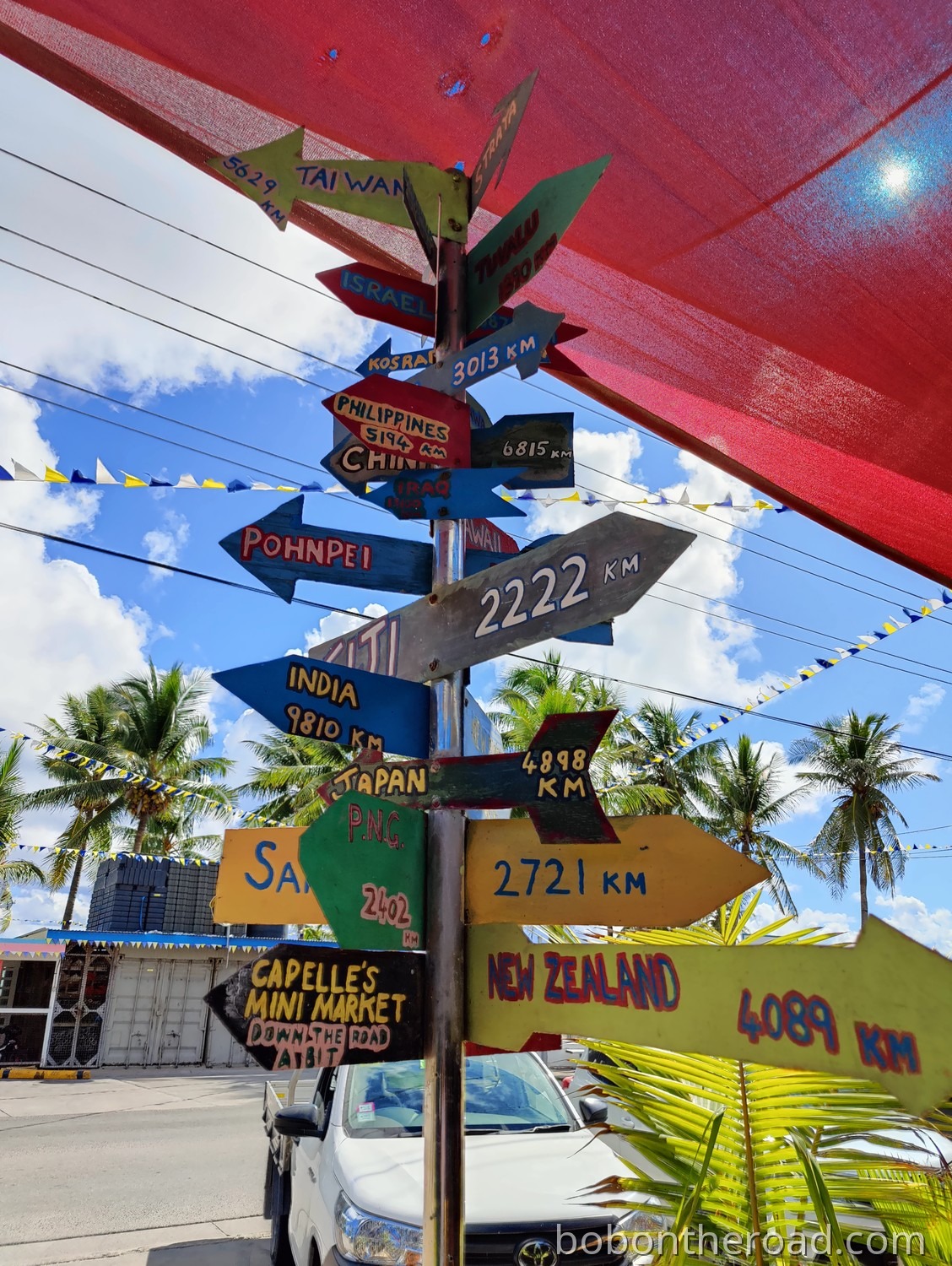
Nauru is one of the least visited countries on Earth. The government is very reserved when it comes to visitor numbers, so there are no official statistics on how many tourists Nauru actually receives. Some sources claim as few as 200 per year, others about 2,000. I think the truth is somewhere in between. When we arrived, there were about 10 other foreigners on the plane. I do not know if they were all tourists, but if you do the math, 2,000 feels more realistic than 200. Either way, Nauru is definitely one of the least visited countries in the world.
Map of the highlights
How do you get to Nauru?
Getting to Nauru is quite complicated. Basically, there is only one realistic option: a flight with Nauru Airlines. There are two weekly flights from Fiji, two from Tarawa (Kiribati), and 2 to 3 flights per week from Brisbane. Because there are only a few connections, a one way ticket can easily cost several hundred euros, and that does not include the flights you need just to get to one of the three departure points in the first place. The only airline that flies to Nauru is Nauru Airlines.
Do you need a visa?
Only very few nationalities can enter Nauru without a visa. Apart from citizens of a few Pacific island states (excluding Kiribati), only travelers from Taiwan, Russia, the UAE, and Israel can get a visa on arrival.
For 66 nationalities (including EU member states, Australia, Canada, and several others), there is a simplified visa process. Compared to the full process, you do not have to provide a criminal record certificate or a medical fitness certificate.
For the visa, the following documents must be submitted:
- A fully completed Nauru visa application form
- Copy of your passport
- Recent passport photo with a white background
- Hotel reservation or a sponsorship confirmation from a Nauru resident
- Copies of your flight bookings to and from Nauru
- Proof of employment
- Yellow fever vaccination certificate, if you have been in a risk area within the last 5 days
- Proof of visa fee payment
- Criminal record certificate
- Medical fitness certificate
A one month visa costs 50 AUD.
So in the end, you need quite a lot of preparation to get a visa for Nauru. Unlike many countries, you can simply send the documents to an official government email address of Nauru. Normally, the process takes up to a month.
However, we had a pretty bad experience organizing the visa. First we wrote an email to the official visa address, but never got a reply. Then we contacted our hotel, which helped with the formalities. After more than two months, and with only two weeks left before our arrival, we contacted Nauru Airlines. Only after doing that did we receive our visa within 48 hours.
So make sure you allow plenty of time if you want to apply for a visa.
For context: we applied for the visa in May/June 2024 and traveled to Nauru in August 2024. At that time, all Google links to the application form led to a “Not Found” page. You can find the visa form here: Link to the Visa Form
History of Nauru
Nauru has an interesting but also very sad history. The island was already inhabited around 1000 BC. In 1798, it was discovered by a British captain. In 1888, Germany annexed Nauru after a civil war. In World War I, Australia took control, before Japan occupied the island during World War II. In 1945, Nauru came back under Australian control. Finally, on January 31, 1968, Nauru became independent.
In 1900, phosphate was discovered on the island, and mining began in 1907. In the 1970s, thanks to phosphate mining, Nauru temporarily had the highest income per capita in the world. In the 1980s, however, the resources were largely depleted, and the economy began to collapse. Due to mismanagement and unsustainable mining, a large part of the island is now practically unusable, and because of the high pH level in the soil, agriculture is barely possible. Most people live on a narrow strip along the coast. Buada Lagoon, a freshwater lake, is one of the few places that has preserved the island’s original character.
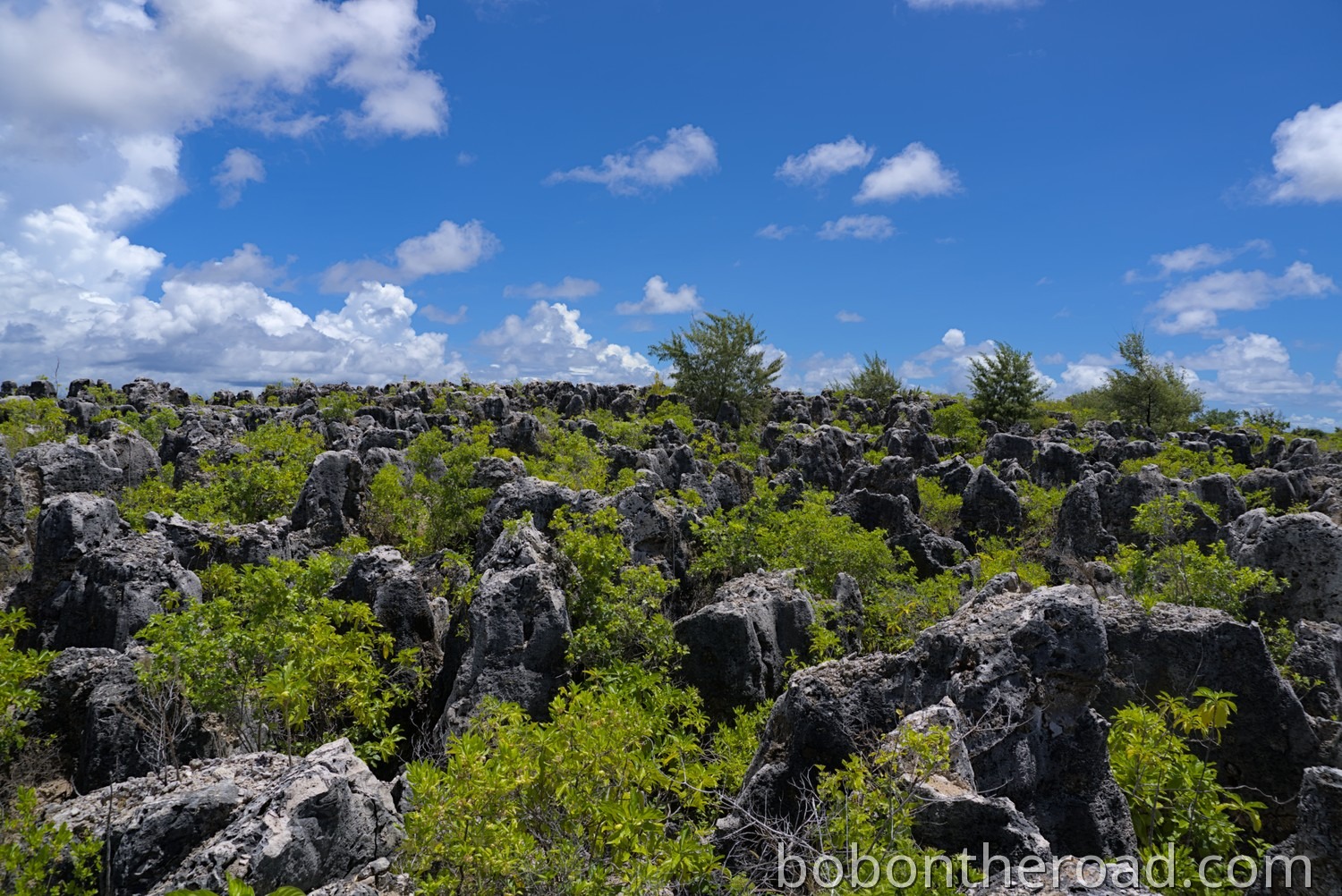
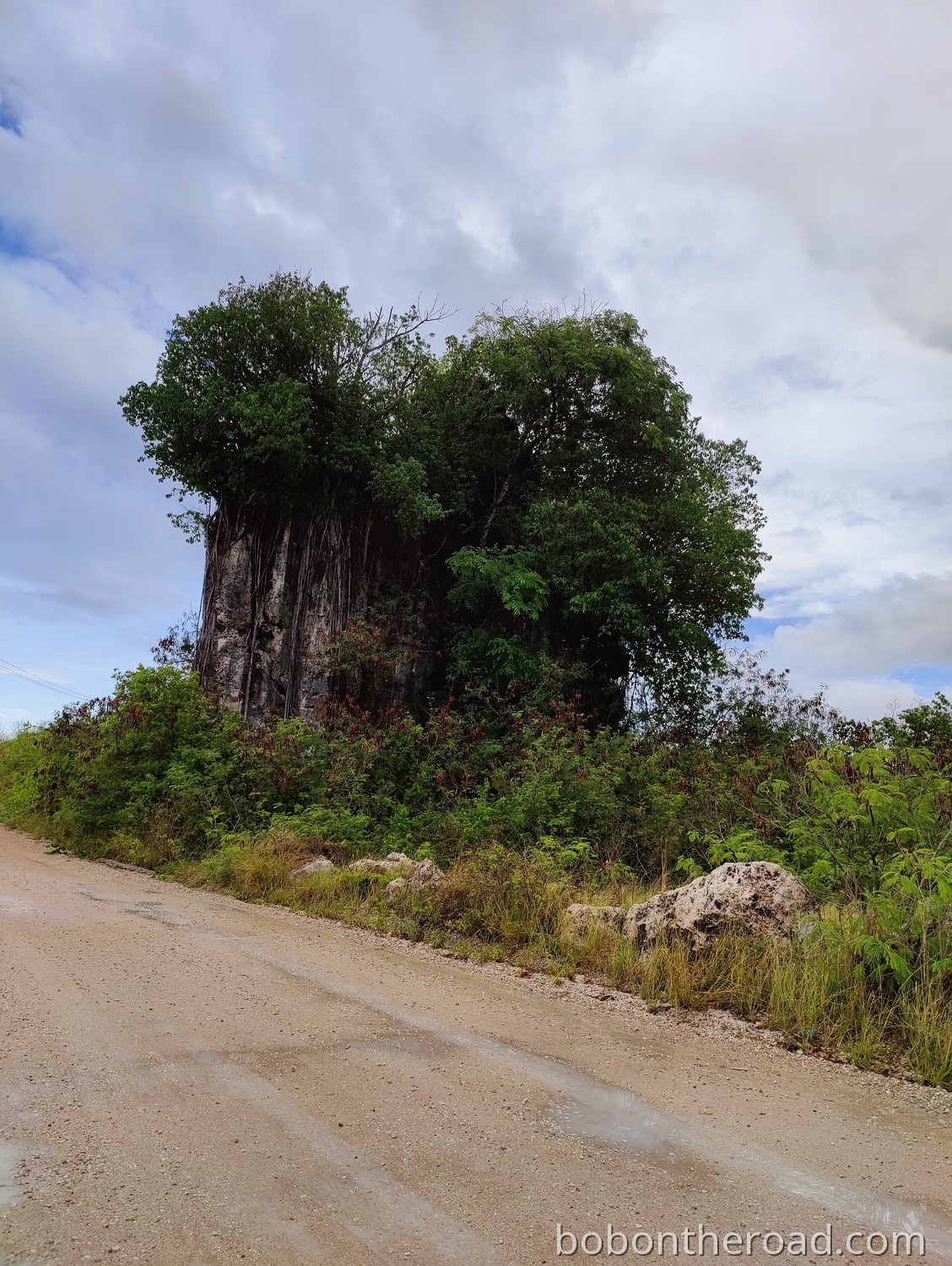
Today, the entire interior looks like this. The landscape is covered in limestone formations that can be several meters high and are slowly but surely being overgrown by shrubs and bushes.
Is it worth visiting?
We believe every place is worth a visit. But before our trip to Nauru, we heard a lot of negative things about the country:
- The island is drowning in trash
- There are tons of stray dogs, so you cannot cross the road without being barked at
- Police are everywhere
- There are no working ATMs
- and so on
Yes, the island has problems. Obesity and diabetes are a huge topic. Officially, more than 90% of the population is said to be overweight and more than 70% obese. We cannot confirm these numbers. There are many overweight people, but not to that extent, at least not among the people we saw.
We also had the fewest issues with stray dogs in Nauru compared to all the Micronesian islands we visited. The beaches and the surroundings were surprisingly clean. There is trash here and there, but in parts of Southern Europe you sometimes see more.
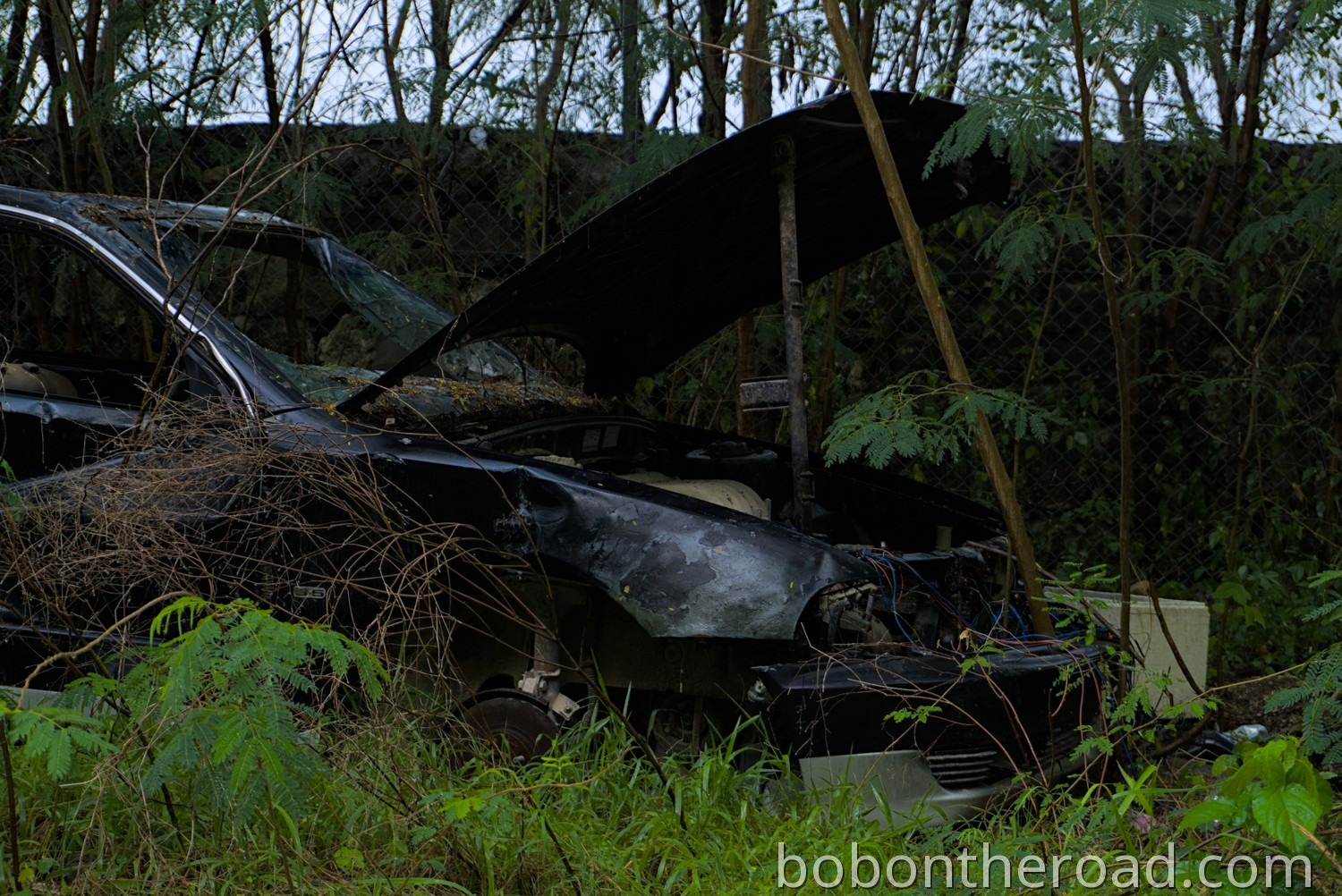
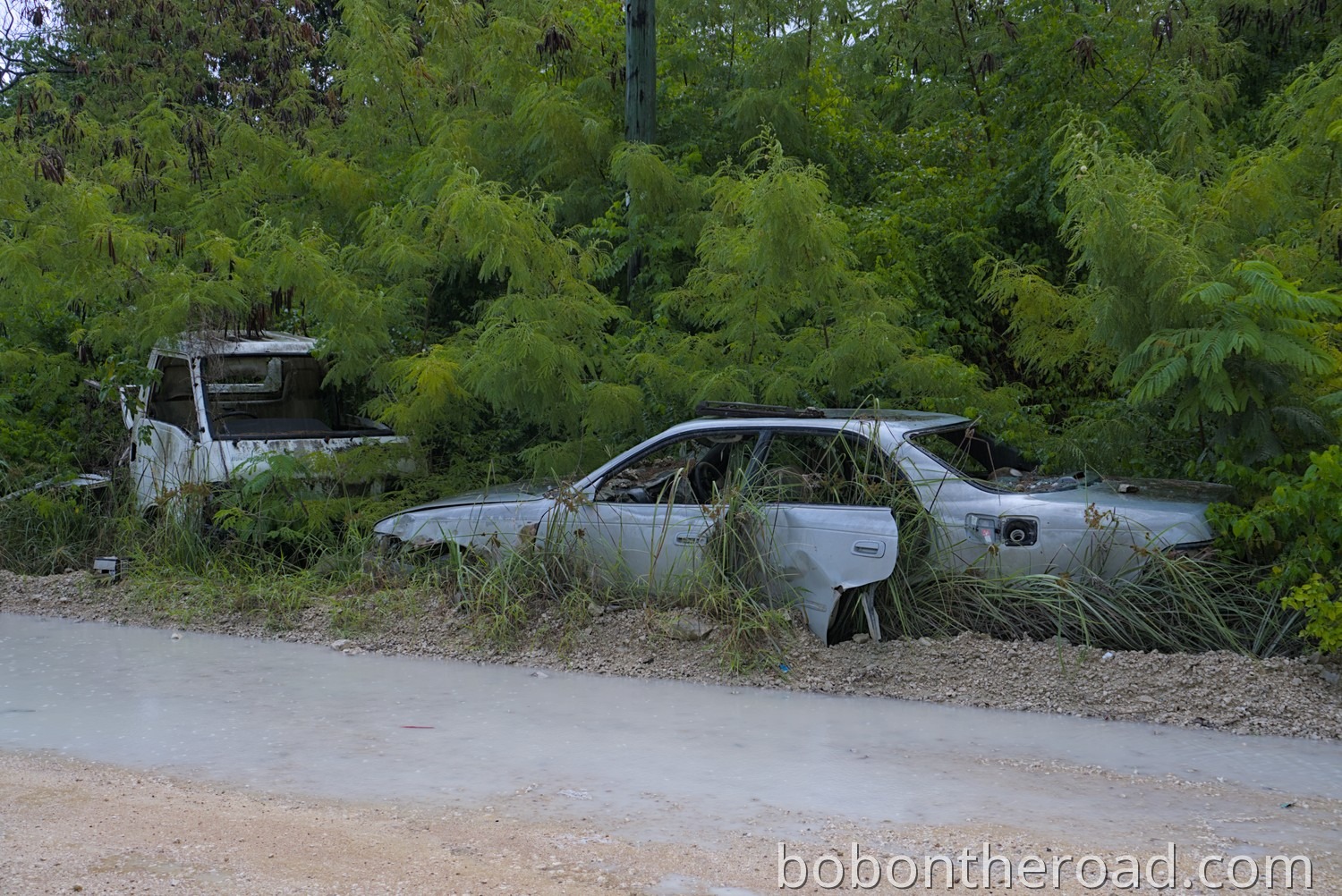
In a YouTube video, someone claimed that broken cars are everywhere along the roads, rusting away. We cannot confirm that either, and you see more of that on other Pacific islands. There is only one road with old rusty cars, and it is right next to the scrapyard.
We barely saw any police, and there was no sign of constant checks. We even got lost once on the inner plateau, where the infamous detention centers are located, meaning a strictly controlled area. But nobody was out there patrolling or stopping us.
We also saw two working ATMs. Still, we recommend bringing enough cash.
Conclusion:
We are very glad we formed our own opinion of Nauru and were able to challenge many of these negative stereotypes. On the other hand, Nauru is really expensive. Spending 500 to 1,000 euros for two to three days sounds crazy, and it is. We would not recommend flying across the world just to visit Nauru. But if you are traveling around a few Pacific islands anyway and are already in the region, then visiting Nauru is definitely worth it.
Hotels in Nauru
Nauru has only five official accommodations:
- Od-N Aiwo
- Menen
- GoodWorks
- Ewa Lodge
- Sunset Queen Accommodations
Od-N Aiwo is an official hotel, but we are not sure if it is even open. From the outside it looked more like it was closed. If it is open, the facade definitely needs renovation.
Menen is a hotel on the east side of the island. We met a traveler who stayed there and was completely disappointed. The hotel was apparently full of Chinese workers who did not want much contact with foreigners, and overall the hotel and rooms were said to be poorly maintained.
GoodWorks is basically converted shipping containers as rooms, with shared bathrooms. We stayed there. It is not luxury, and it can get quite hot, but all rooms have air conditioning. You have everything you need, and the owner, Moralene, was amazing. She helped us with the visa, waited for us at the airport, and much more. You can also rent a car or a scooter there.
We do not know much about Ewa Lodge. We only had breakfast in a café nearby, surprisingly cheap (I think it was 4 AUD for a cappuccino) and very good. There is also a working ATM there. Across the road there is a very nice, well maintained stretch of beach.
According to Google Maps, Sunset Queen is right next to GoodWorks, but I cannot remember seeing it. The photos online also make it look like it is right next to the runway. Based on that, I would rather choose one of the other four options.
What to see in Nauru
Nauru is only 6 kilometers long and at its widest point only 5 kilometers wide. In theory, you could walk around Nauru in one day, but there is still quite a bit to see in this small country.
Anibare Beach
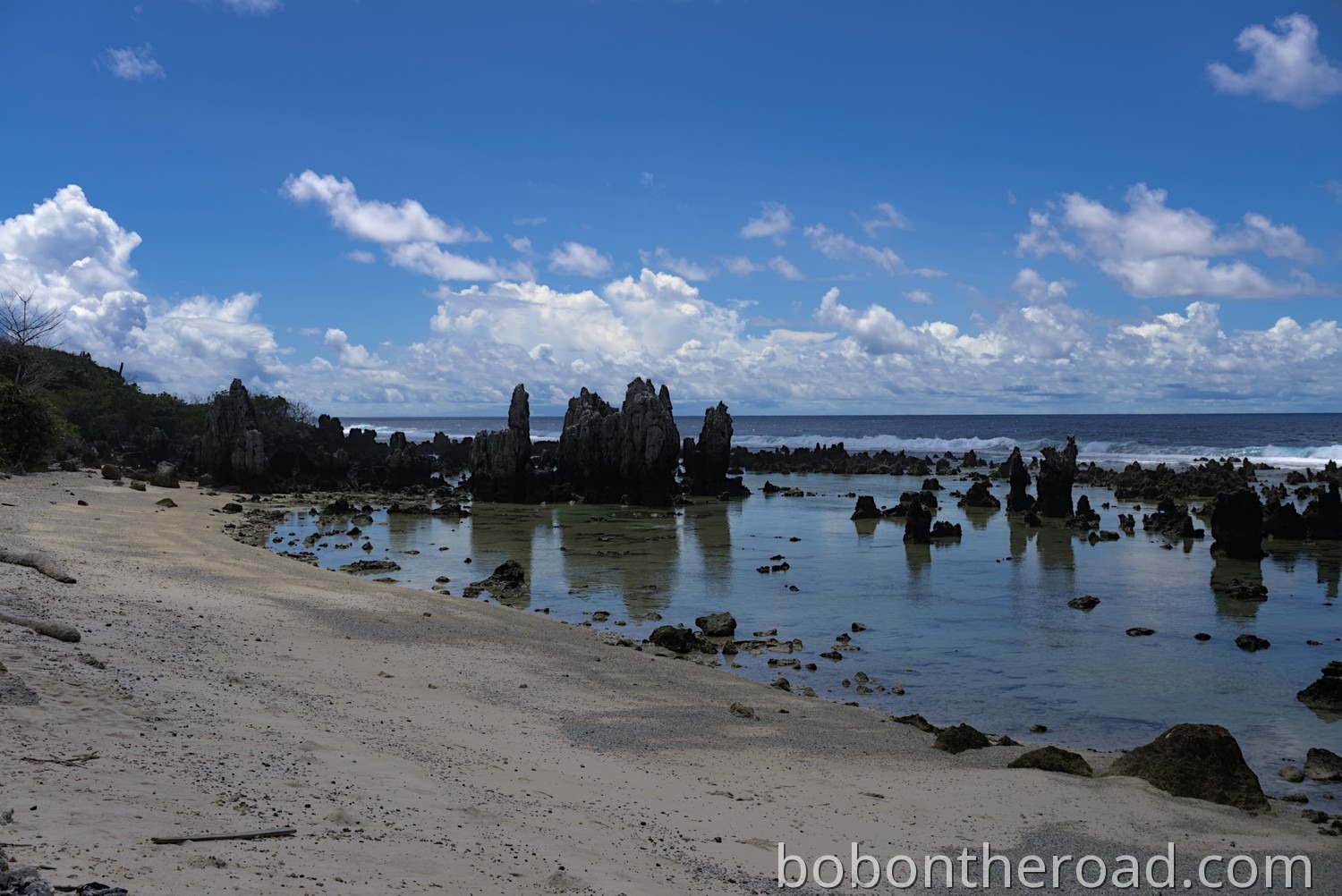
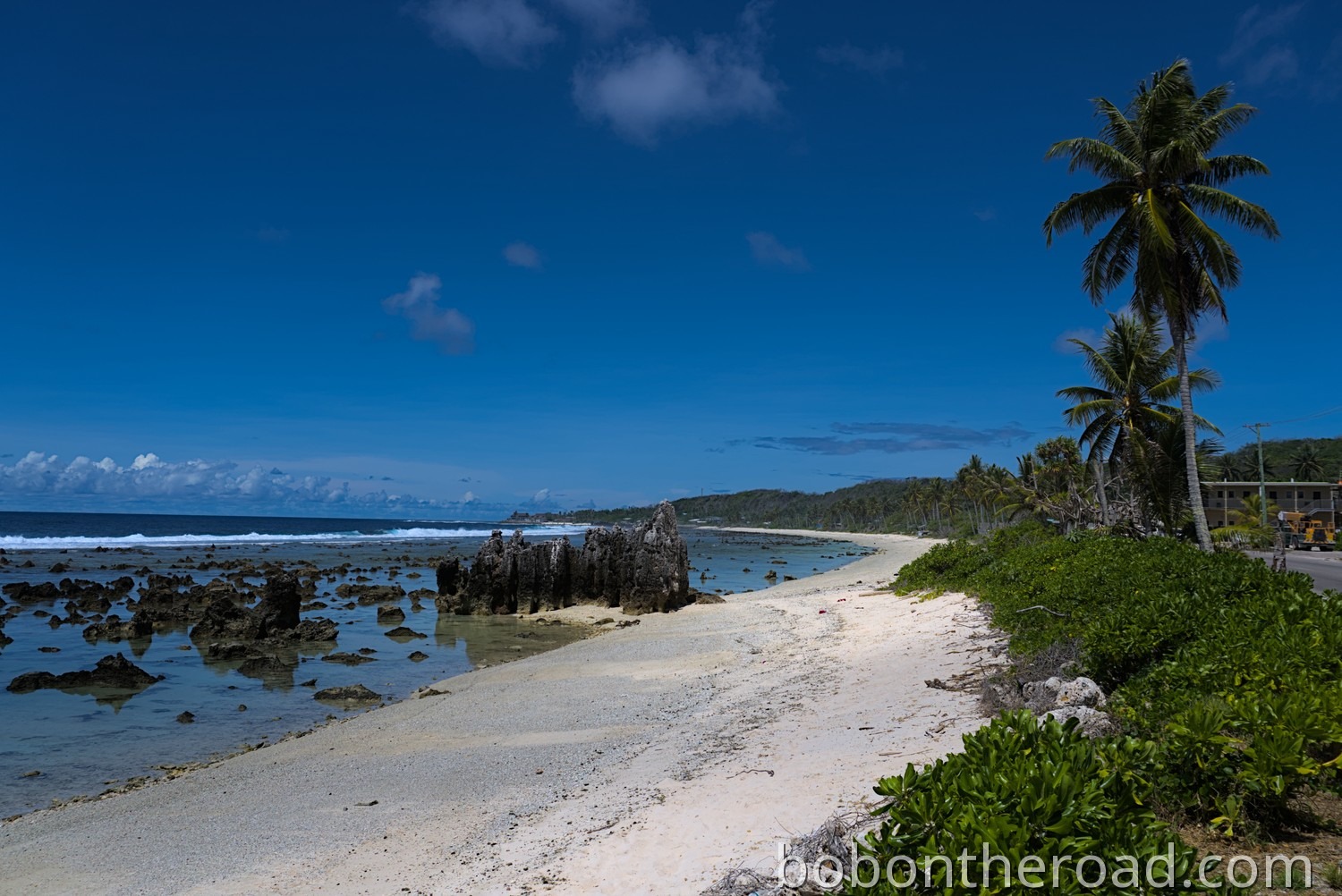
Anibare Beach is the most famous spot in Nauru. The beach is on the east coast in the district of Anibare. It is covered with limestone formations and is perfect for photos, especially at sunrise. Swimming is not possible here. The water is very shallow up to the break, and the sharp limestone formations make it practically impossible. Beyond that, there is surf with dangerous currents.
Royal Navy Harbor
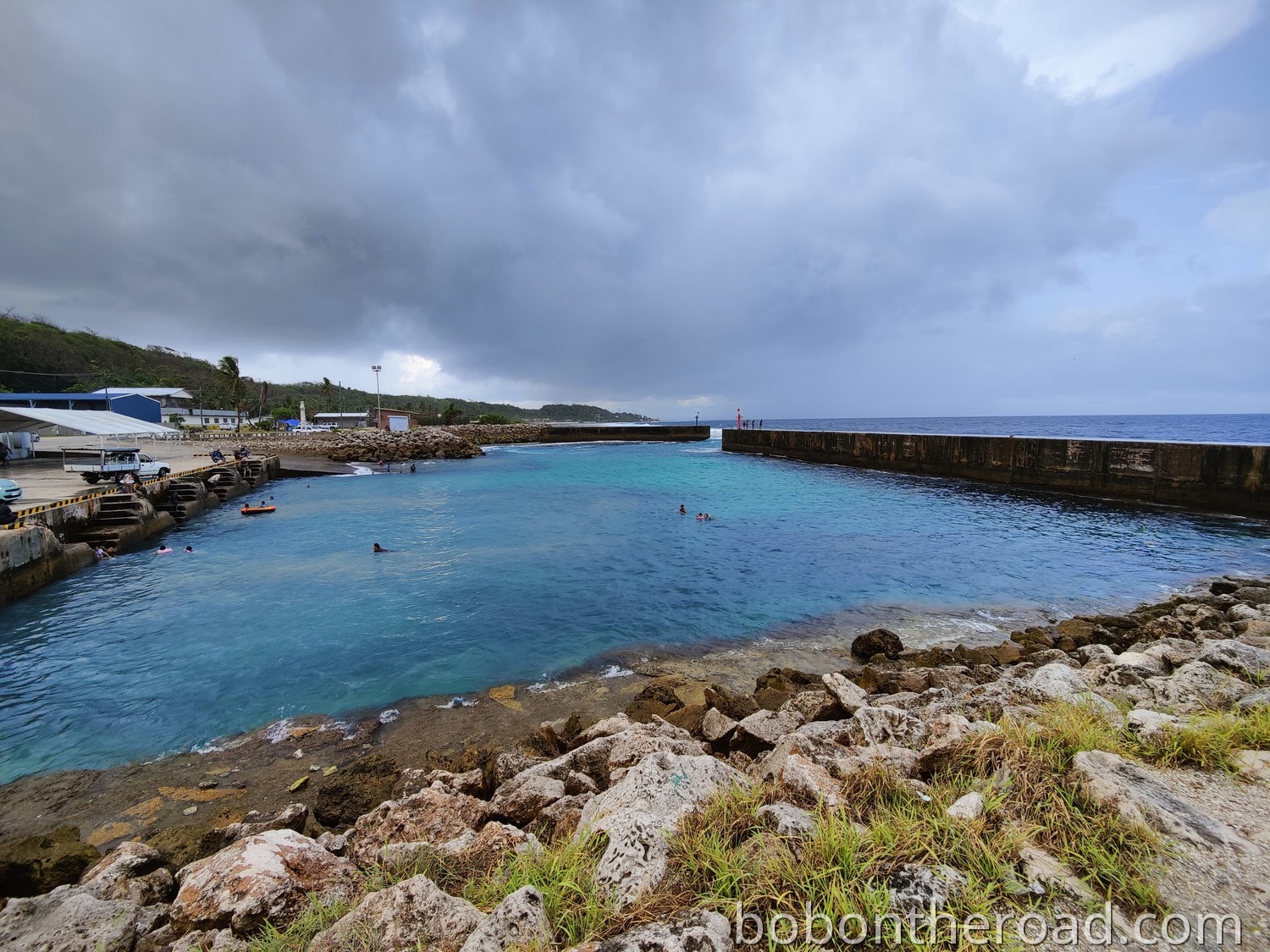
No warships, but lots of locals swimming in the harbor. Because of limestone and shallow water, you can barely swim anywhere along the coast. In the harbor, the water is deeper and protected from currents. In photos, the water often looks turquoise. When we were there, we had one of the strongest rainfalls in months during the afternoon, so the color was not as intense.
WWII Memorial Monument
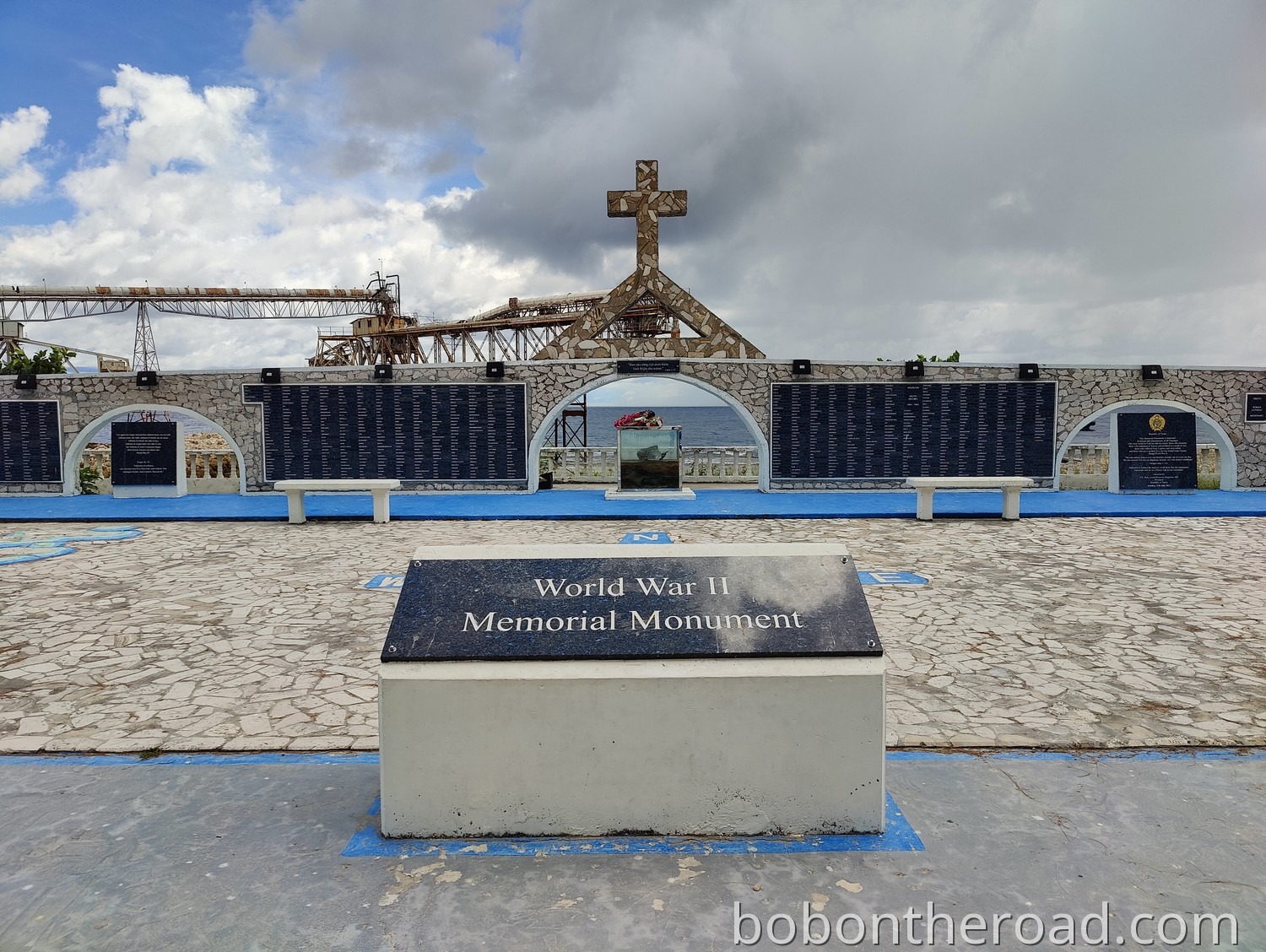
In the district of Aiwo there are several great photo spots. The monument was opened in 2021. On the memorial wall, embedded in phosphate rock, there are more than 1,200 names of Nauruans, as well as foreigners who died on Nauru or in exile. Many others also died as a result of the war. In the center of the monument there is a glass display case with soil from the leprosy station in Menen, soil from the island of Chuuk, and shrapnel from the US bomber Coral Princess, which was shot down over Nauru.
“Trading Raptor”
Right behind the WWII memorial stands Nauru’s Trading Raptor. Nauru’s golden days of phosphate mining are in the past. Nevertheless, Nauru still exports phosphate, around 50,000 tons per year. This phosphate is loaded onto ships via the Trading Raptor. The conveyor makes a perfect photo motif.
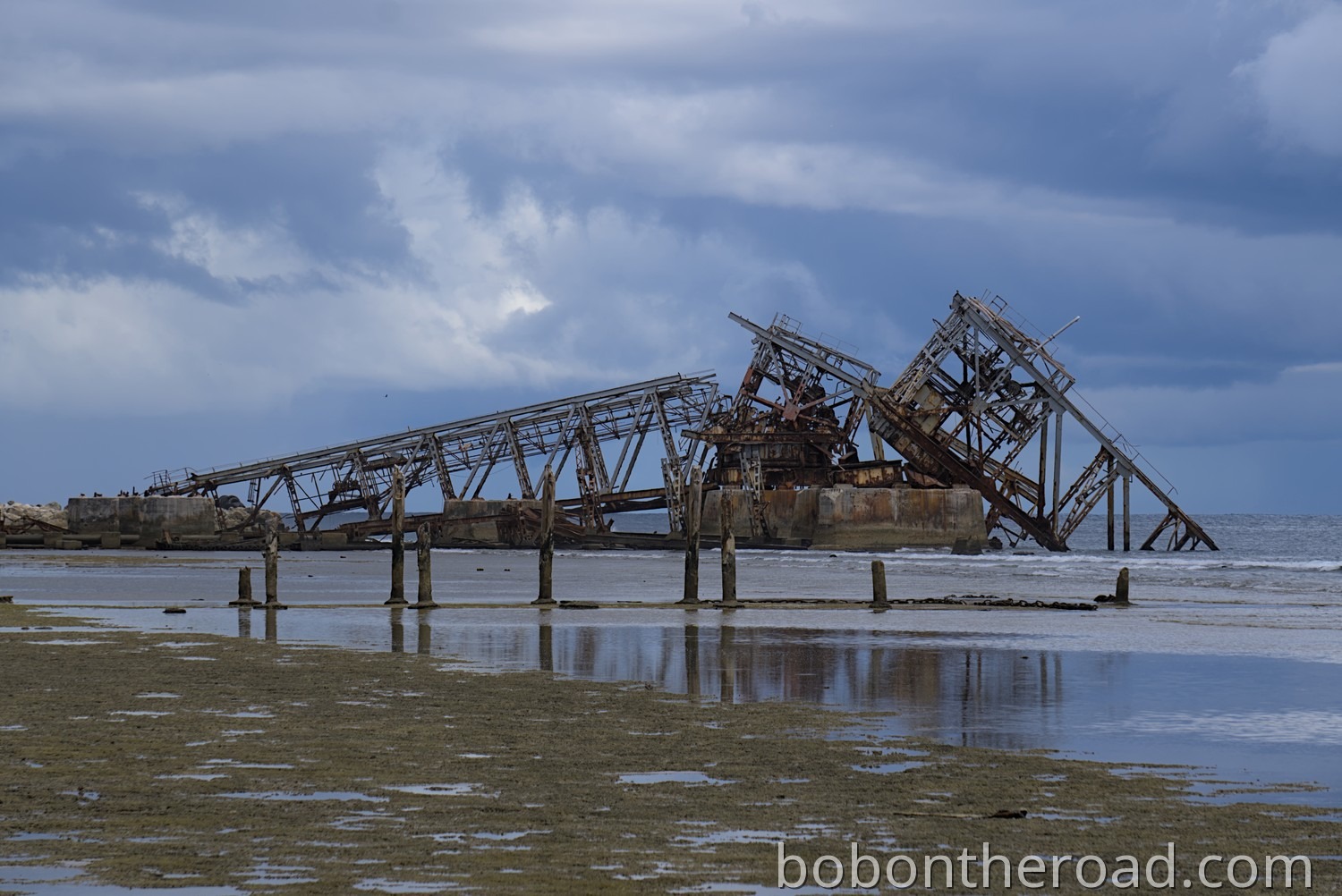
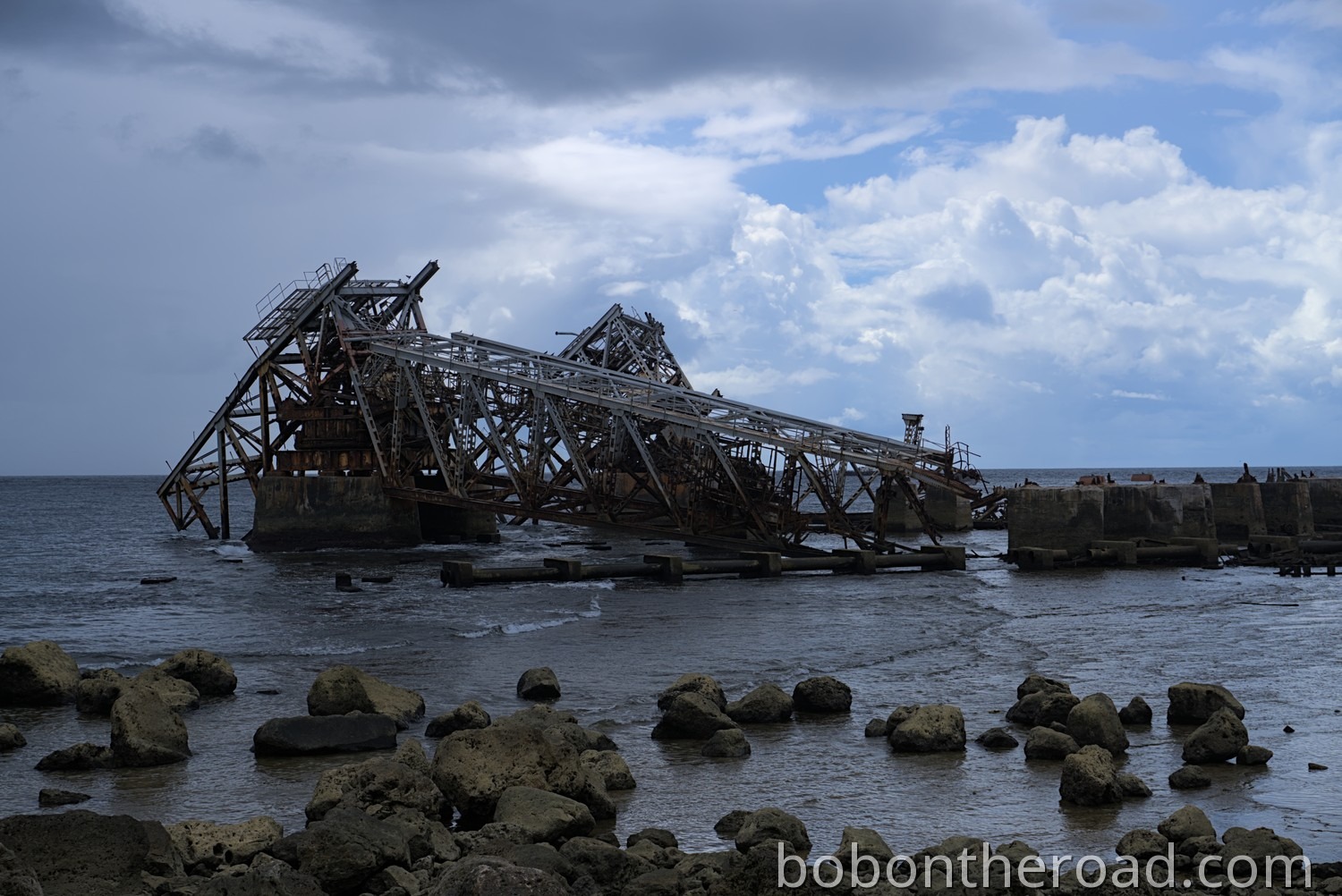
Old Phosphate Loading Gantries
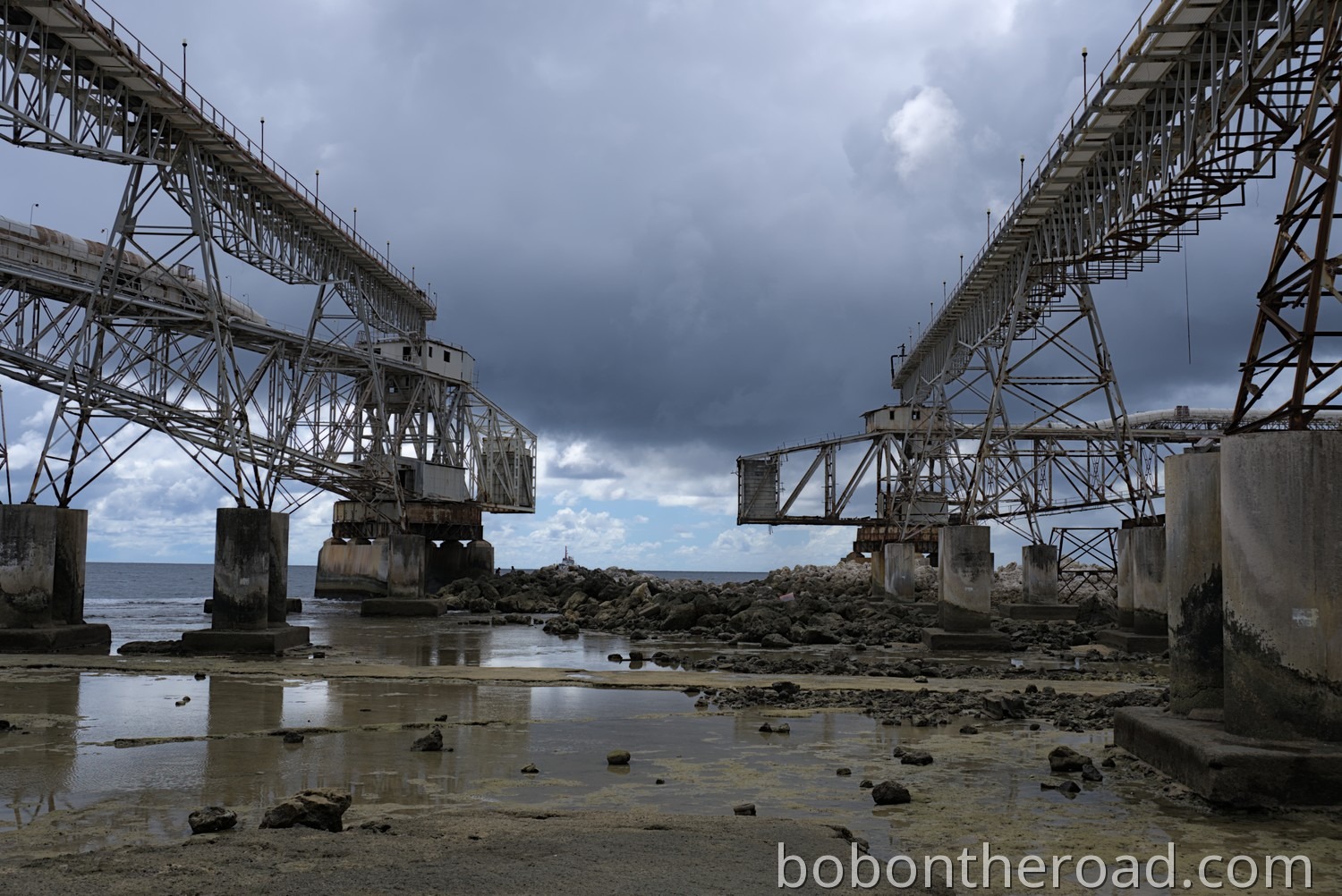
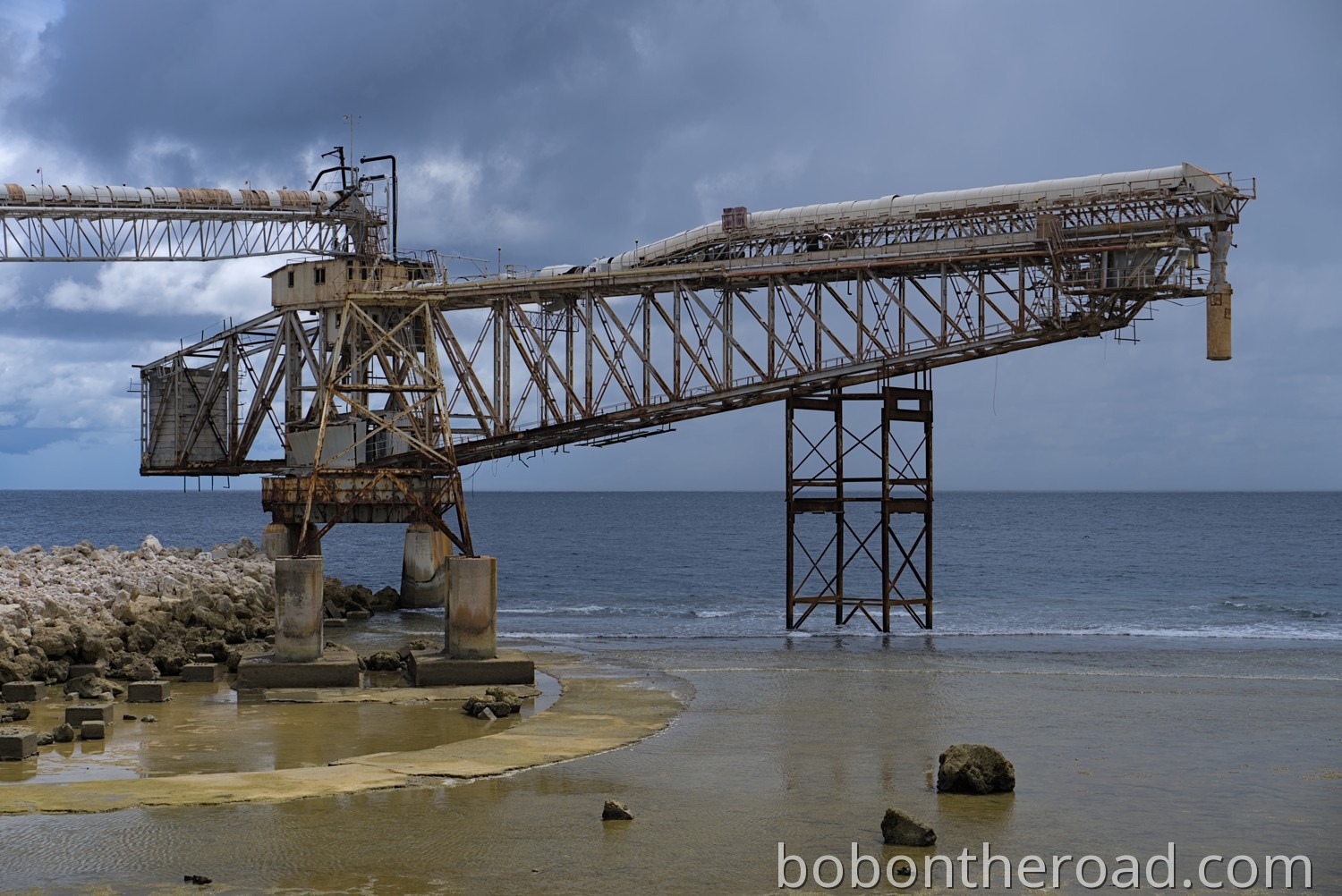
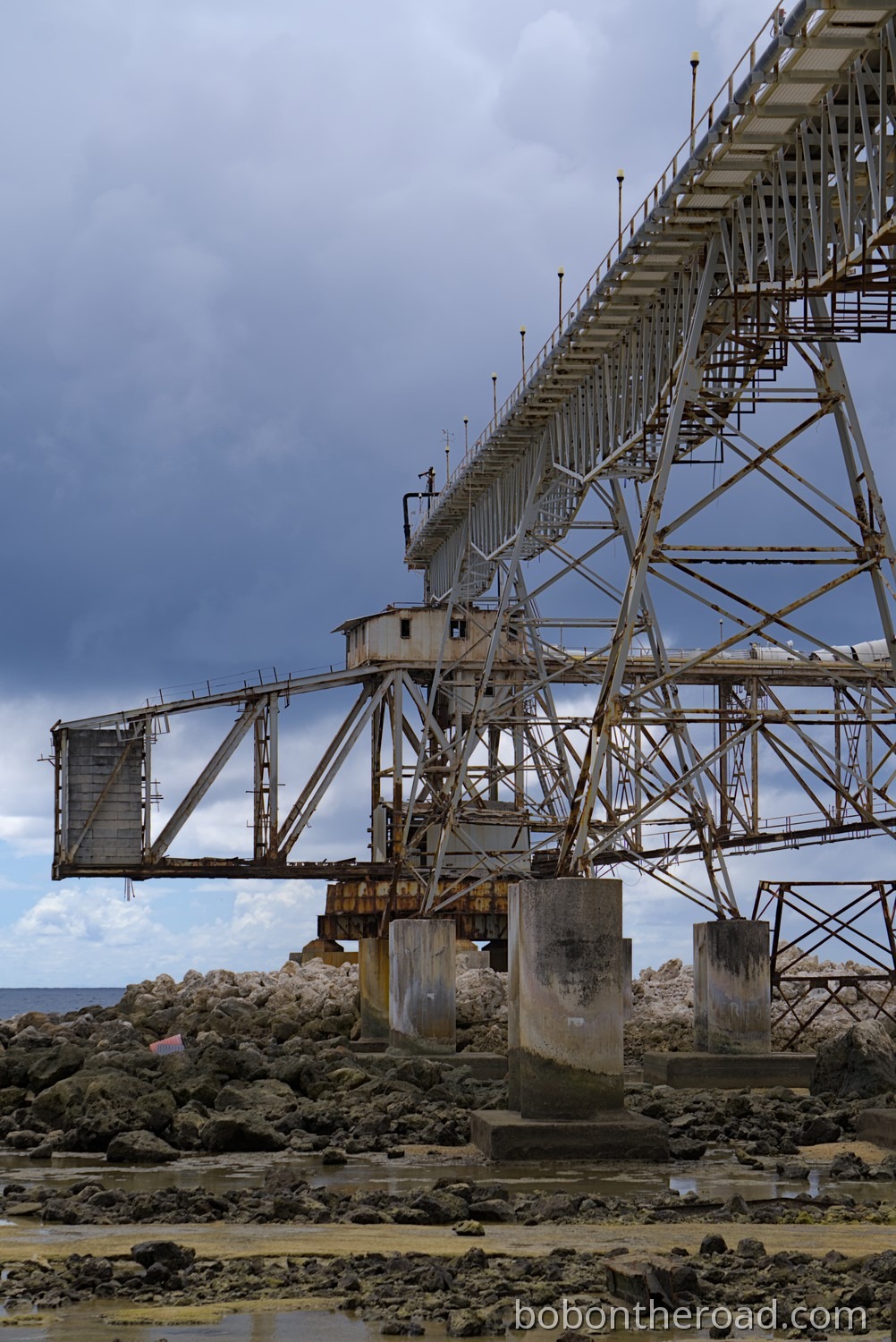
A few hundred meters further south are the old phosphate loading structures. This loading station was heavily damaged and destroyed during World War II by the German cruiser Komet.
Buada Lagoon
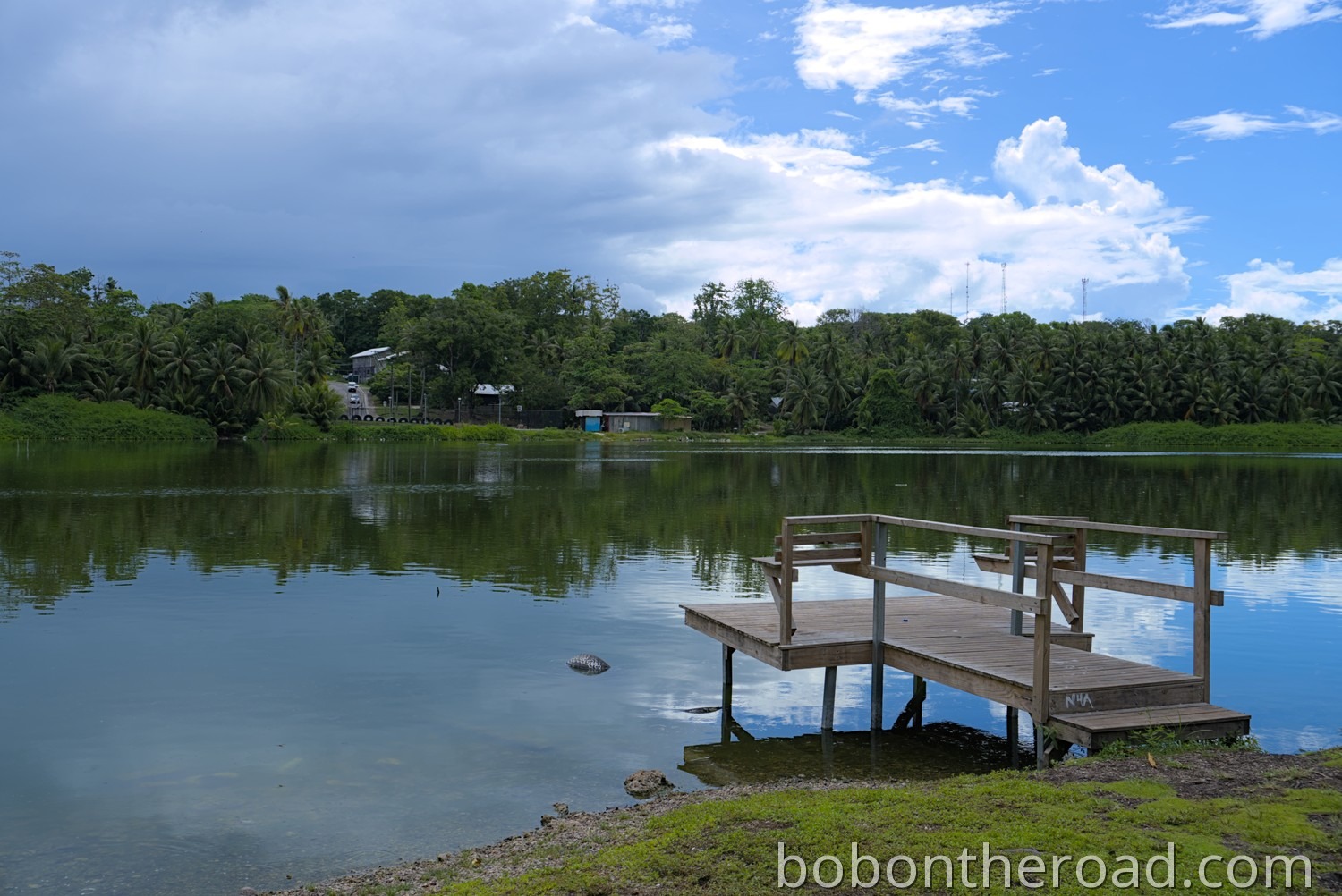
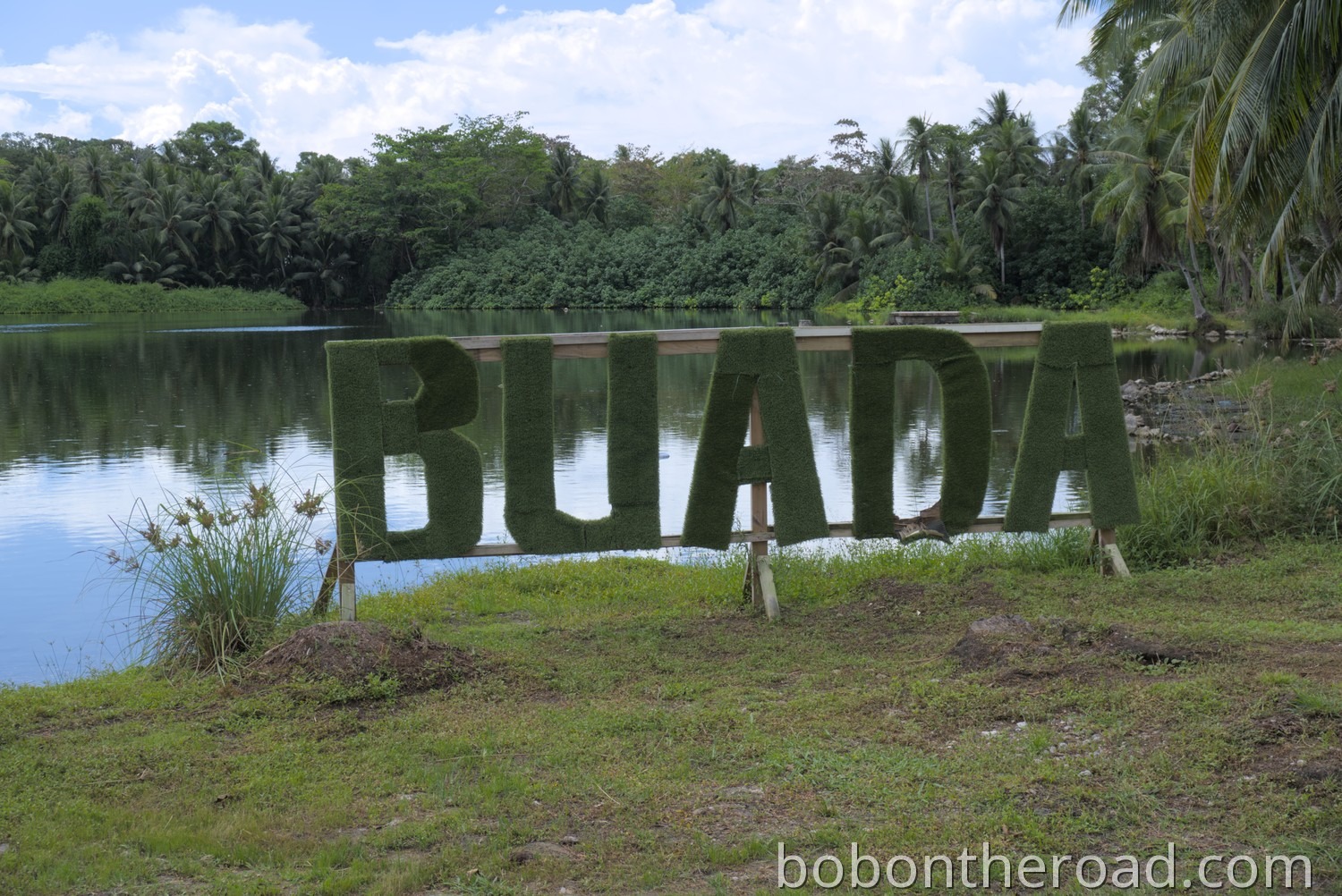
Buada Lagoon is located in the Buada district. It is a small lake about 5 meters above sea level and also Nauru’s only freshwater source. It is fed by surface runoff. The surrounding area is an oasis of calm, and the Buada district was largely spared from phosphate mining. This gives you a sense of what the whole island once looked like.
Upper Plateau
For almost 100 years, all valuable phosphate was mined. What remains are limestone formations, some of them more than 15 meters high, covering the entire area of Nauru. By now, grasses and shrubs have spread and are overgrowing the limestone. The contrast of green vegetation and dark limestone creates a unique photo motif.
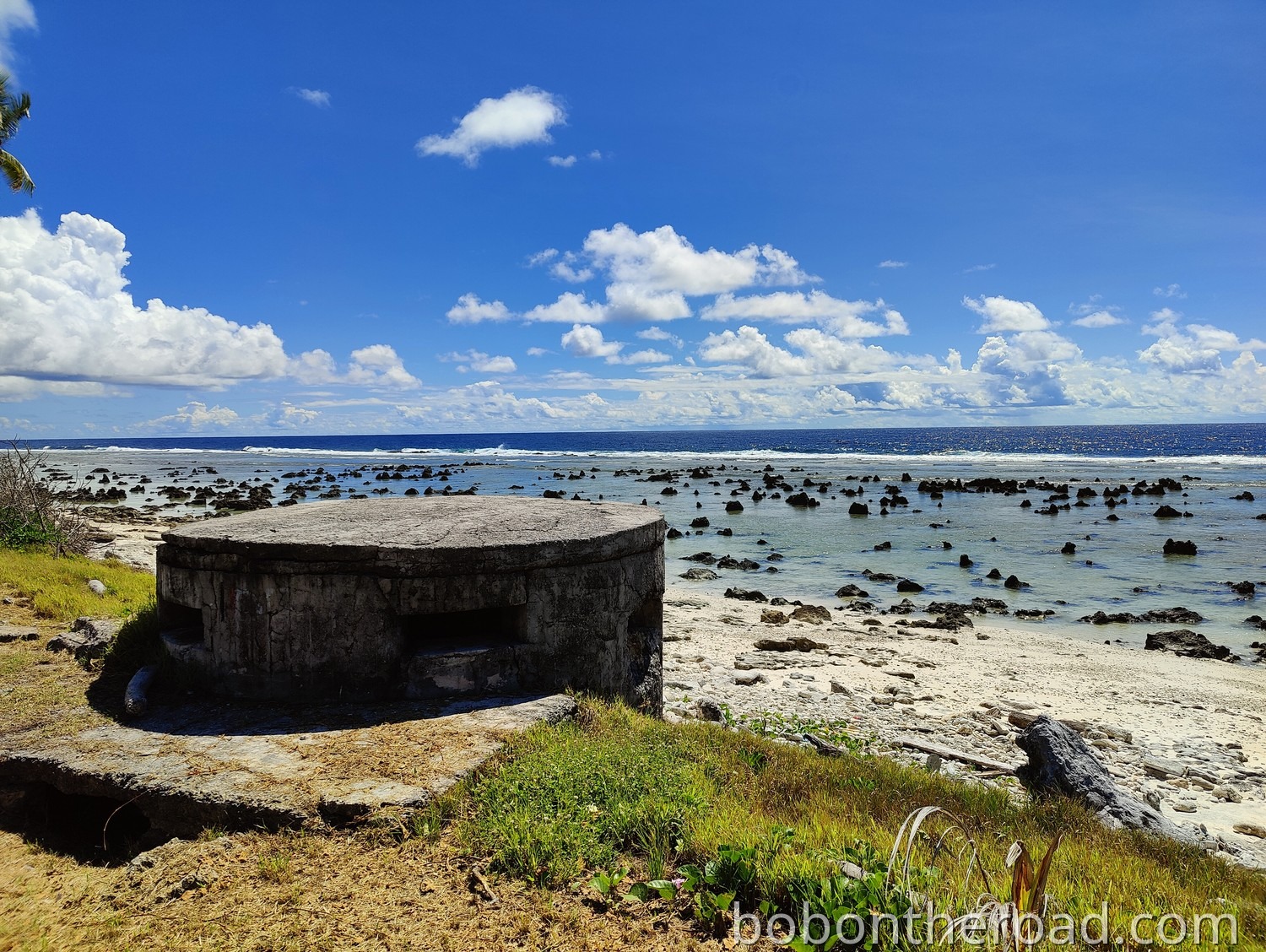
WWII bunker
In the northeast of the island, in the district of Ijuw, there is an old Japanese bunker complex. It is right next to the ring road and impossible to miss.
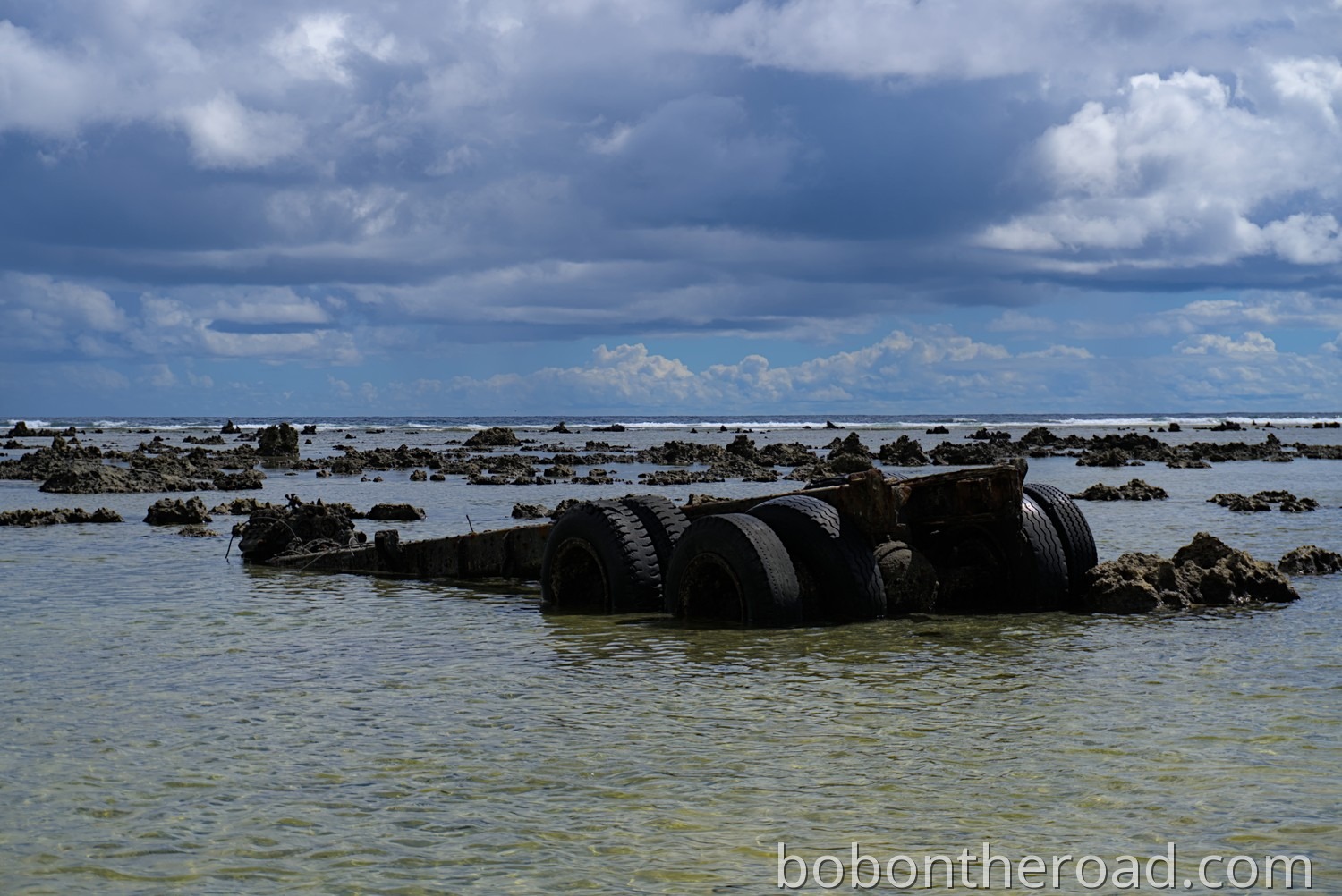
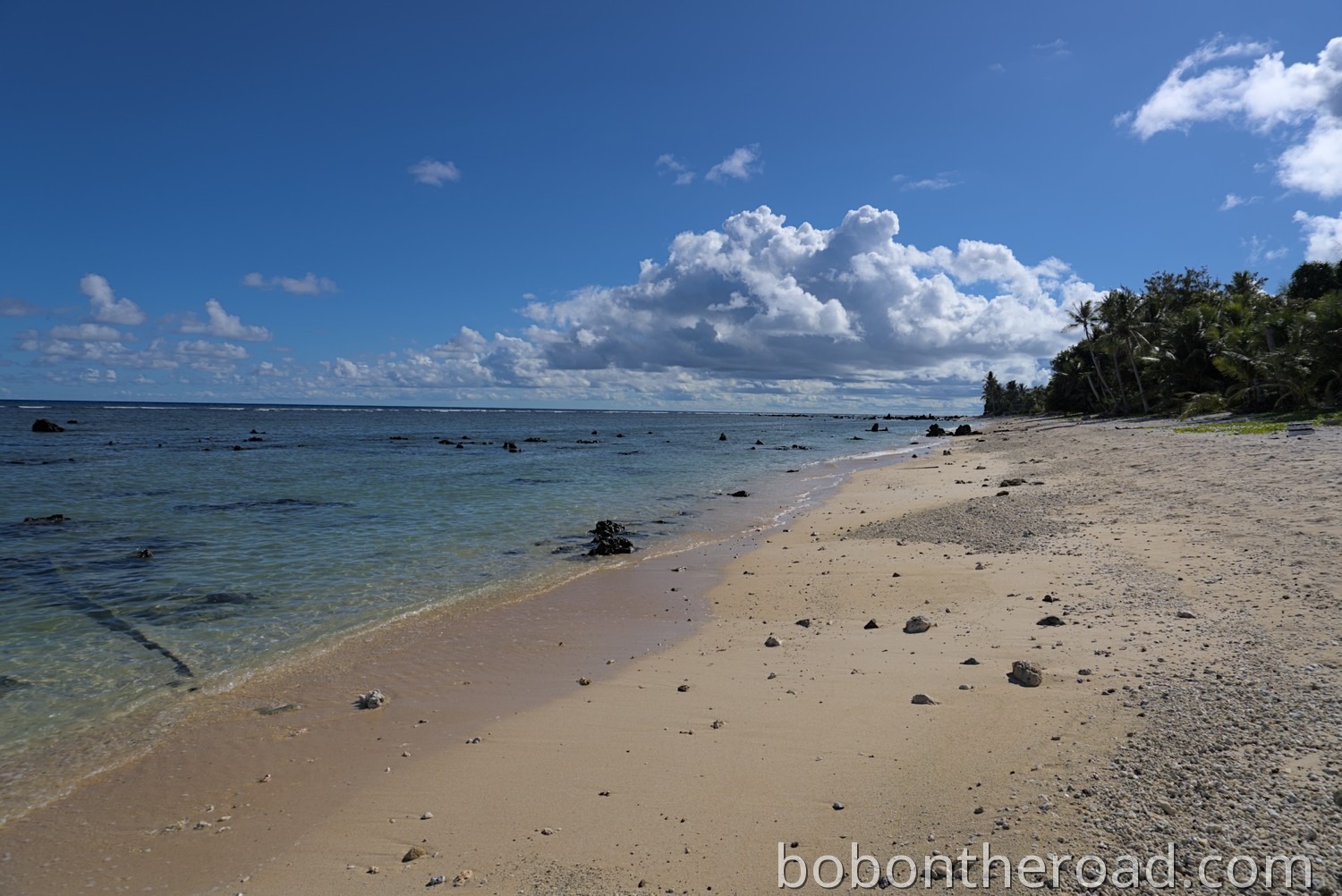
Ewa Beach
Opposite Ewa Lodge there is a nice, quiet beach. Like everywhere on the island, there are sharp limestone formations in the water, and dangerous currents in the surf, so swimming is not possible. There is also a half submerged trailer in the water. No idea how it got there, but it makes a great photo motif.
Car wrecks
Rusty, neglected, broken, overgrown by shrubs. A scene you normally only see in end of the world movies. But on the small stretch of road near the landfill, that is reality. Halfway between the coast in Aiwo and Buada Lagoon, a gravel track leads south. That is where you pass the cars.
Naoero Museum
Probably one of the best things you can do in Nauru. Admission should be free (donations are possible). Unfortunately, the museum is closed on weekends, so we could not visit.
Nauru Parliament House
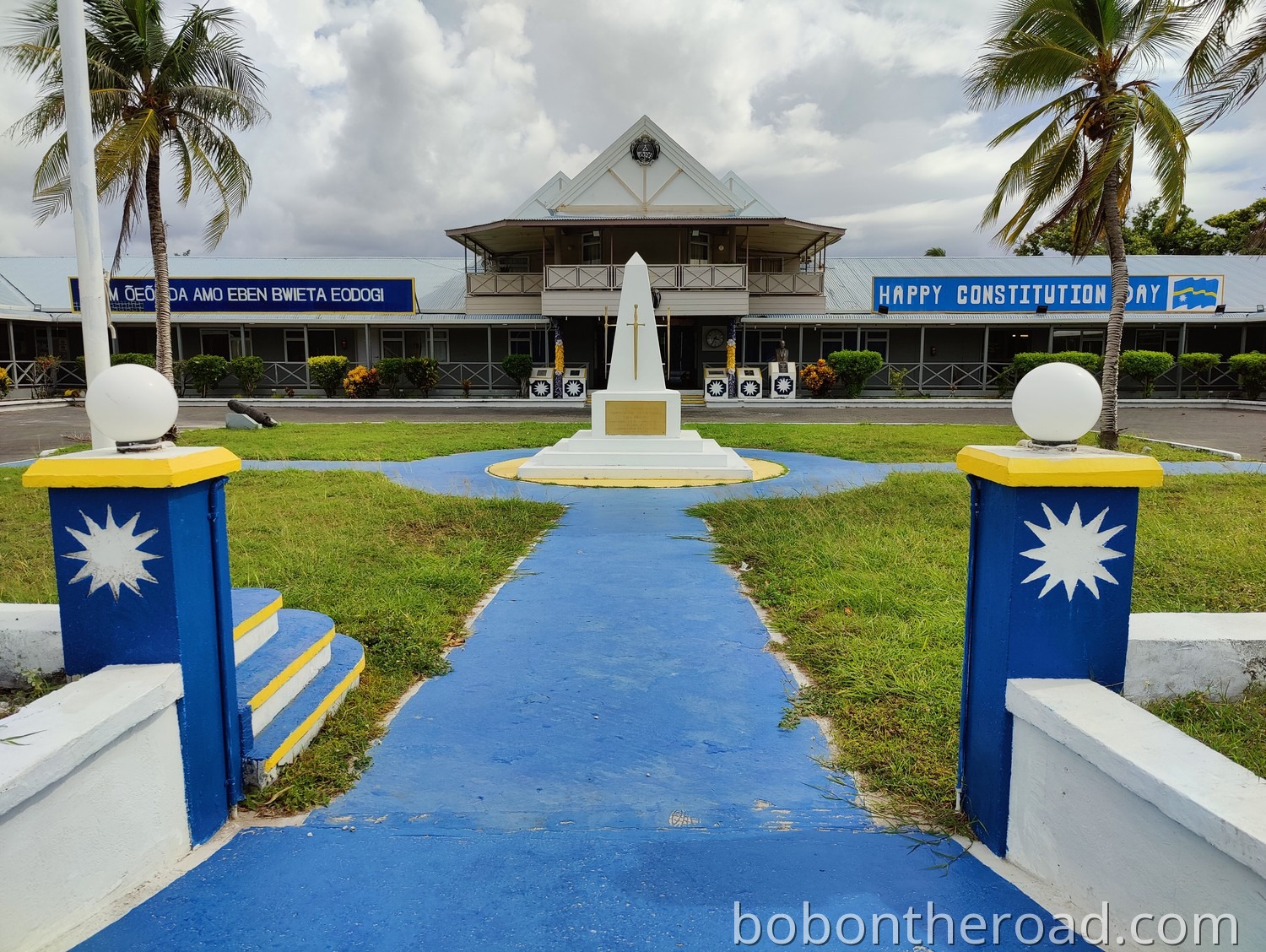
In the district of Yaren, right next to the airport runway, is Nauru’s Parliament House. A beautiful building and one of the photo spots on Nauru.
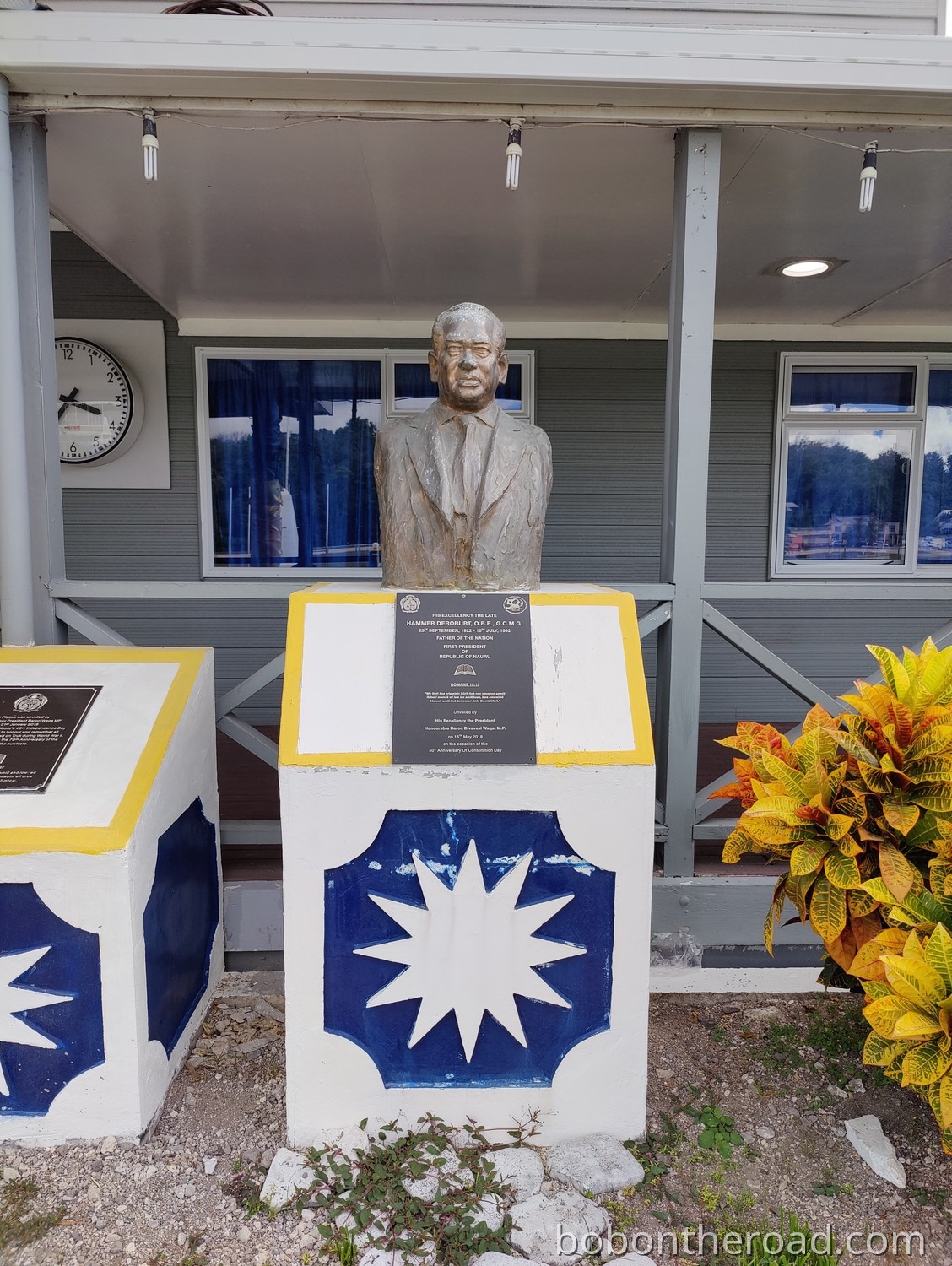
Japanese WWII prison
If you follow the road towards Buada Lagoon, shortly after the Welcome to Buada sign (on the left), there is supposed to be a hidden path leading to the ruins. You have to actively look for it. When we wanted to go to the prison, there was a heavy downpour, so we did not try.
Twin Guns
Also here, the weather ruined our plans. But it is said to be one of the best WWII sites on Nauru. On Google Maps you can see a path after the landfill, from there you can climb up to the Twin Guns.
Takeoff and landing of a plane
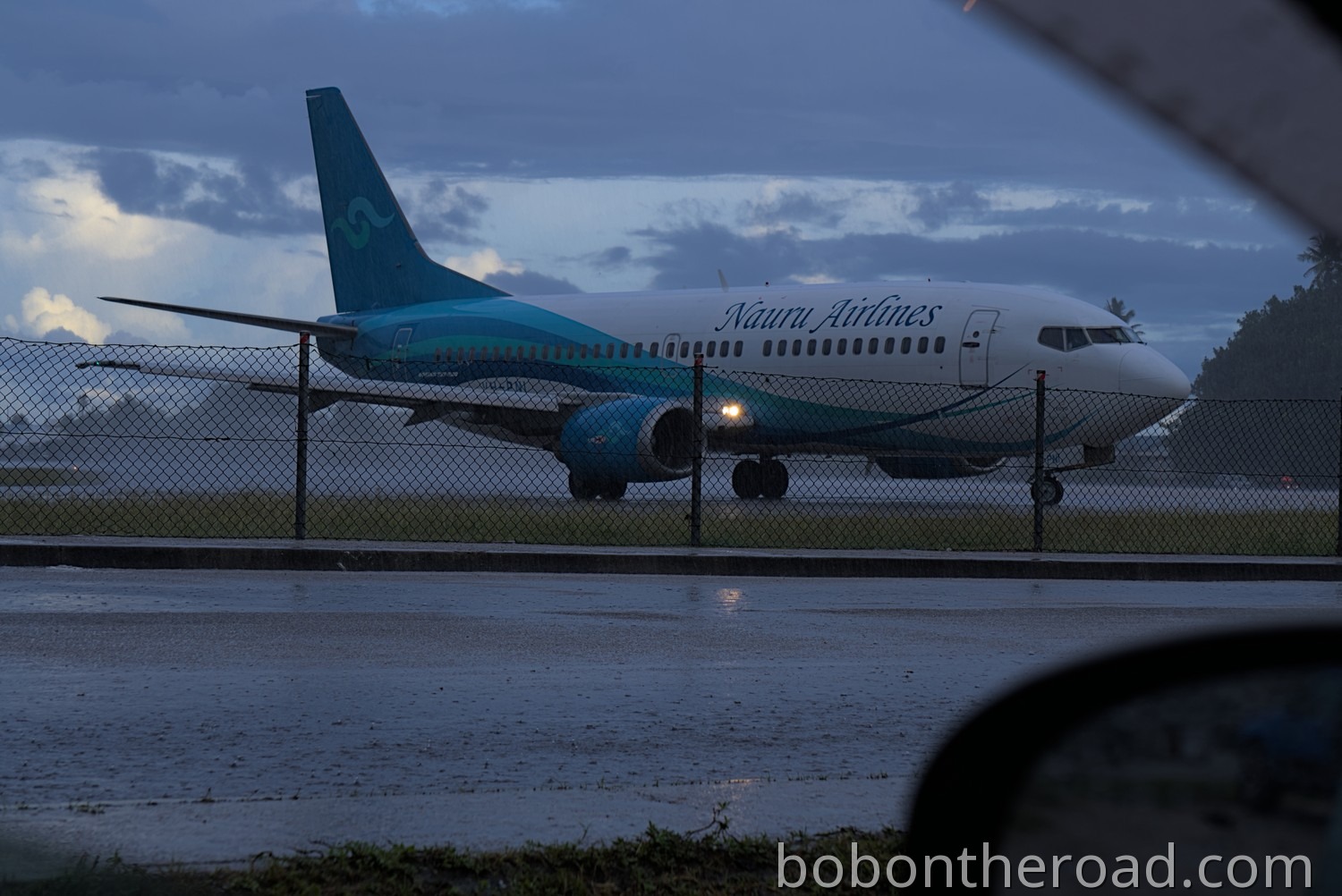
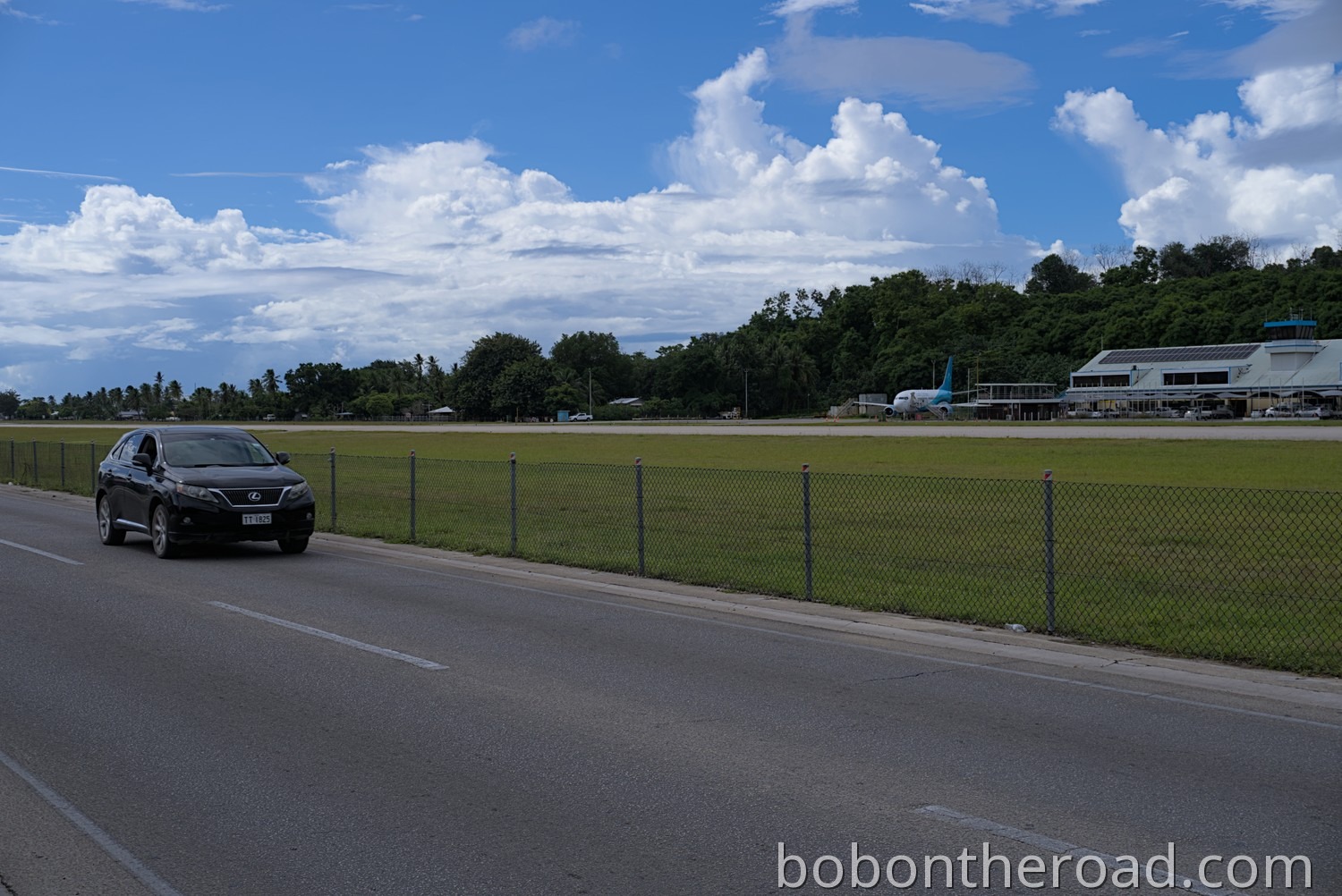
The fact that Nauru, such a tiny country, even has an airport is fascinating. Space is scarce on Nauru, and the ring road runs right next to the runway, so close that the road is closed for every takeoff and landing (about five times per week). Where else do you get this close to departing aircraft? On the west side of the runway there is a small area by the coast where you can park.
Orro Congregational Church
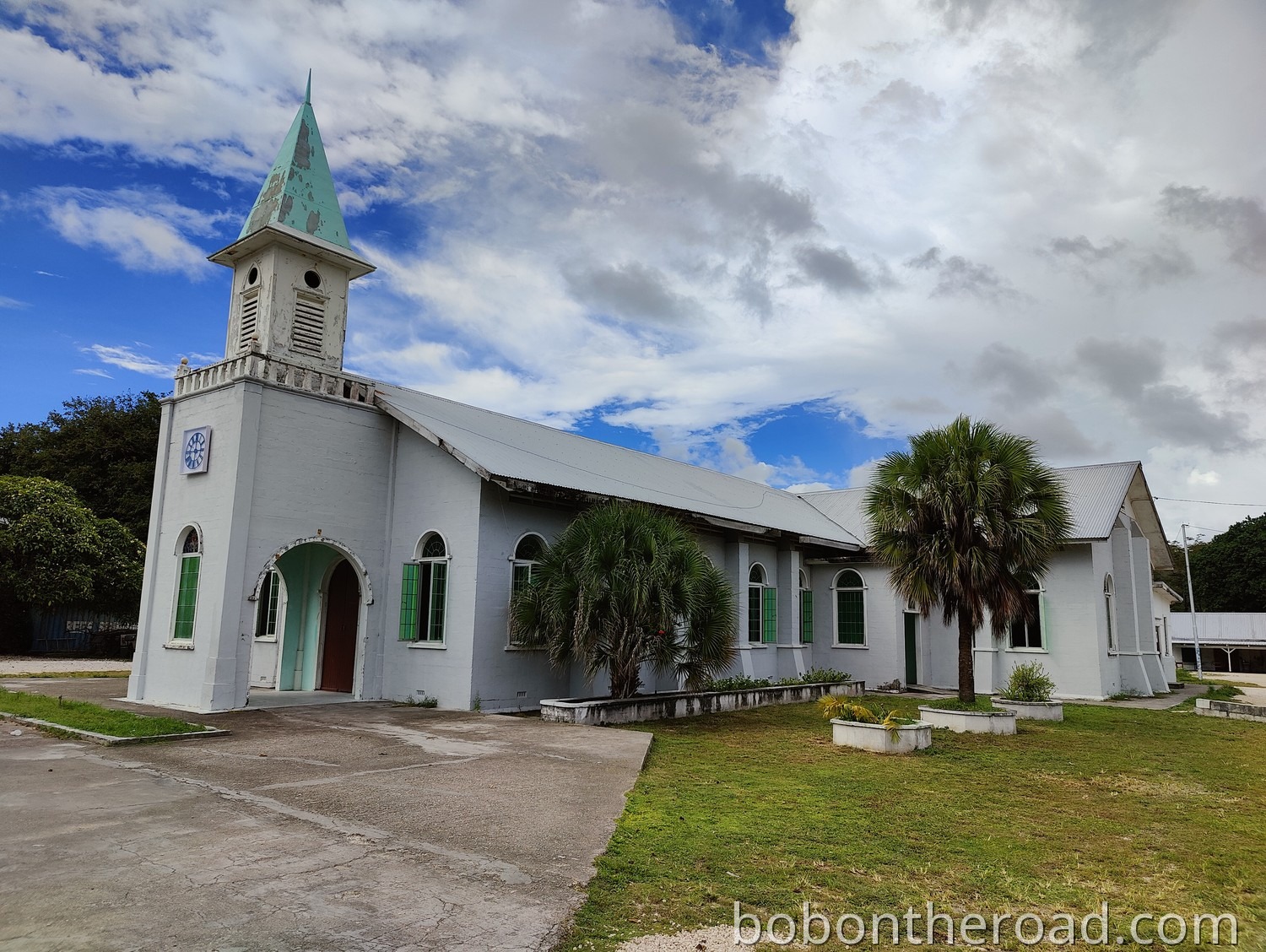
In the district of Aiwo is the Orro Congregational Church, the largest church in Nauru. If you cross the road from the church and walk out to the beach, you get a great view of the old phosphate conveyor.
Places you should not plan for
Command Ridge
Some websites describe Command Ridge as a great viewpoint. Maybe it used to be. Or maybe it is only true if you climb the antenna (which is definitely not allowed). We drove the road up there. Everything is fenced off, the gate was locked, and the bushes are several meters high. You can hardly see anything. So you can skip Command Ridge.
Lookout Tower
Google Maps marks a lookout tower in the middle of the island. There is no tower. The spot is just slightly elevated. There is an overgrown path leading up, but at the top you also see almost nothing because of the high bushes. Not worth the effort.
Getting around
Nauru is a very small island of only 21 km². It is easy to walk around the island in one day. The ring road itself is just over 20 kilometers long. However, temperatures often climb above 30°C during the day, so walking around all day is not ideal.
The best way to explore the island is probably on a small motorbike. In the interior, roads are not paved, so you should not ride a motorbike here for the first time in your life.
Before the trip, we read a lot about huge numbers of stray dogs, which we did not really experience. For that reason, we rented a car. With the car, we drove to every corner of the island.
You can find more about driving in Nauru in this blog: Driving in Nauru
Alternatively, if you want to save some money, you can also rent a bicycle and explore the island on two wheels.
Important:
There is no car rental service in Nauru, so you cannot just arrive at the airport and rent a car there. You have to arrange it in advance. We rented our car through our hotel, GoodWorks Accommodation.
Important notes
Drones
Drones are strictly forbidden in Nauru. If you want to bring a drone, you must apply for an import permit in advance (cost: 200 AUD). Based on our visa experience, that likely takes weeks as well. Without a permit, the drone will most likely be confiscated, because every piece of luggage is checked on entry.
We had our drone with us, mainly for the other islands on our trip, and did not want to import it into Nauru. So at the airport we told the customs officer that we had a drone and asked about a locker. There are no lockers at the airport, but the officers stored the drone in their office. When we arrived at the airport for our return flight, the drone was returned to us without any issues.
There is no guarantee, but in our case it worked.
Cash
Definitely bring Australian dollars. We had heard in advance that ATMs in Nauru almost never work and that many things are cash only. We cannot fully confirm that, because we saw two working ATMs and were able to pay by card in a café.
Still, the last thing you want is to be on one of the most remote islands in the world without money. So better play it safe and bring enough cash.
How long should you stay in Nauru?
Nauru is a beautiful island that you can easily explore in one day. You should definitely not plan too much time in Nauru, because activities are limited. Swimming is more or less impossible, and you can count the sights on one hand. In the end, you could say this: the Nauru Airlines schedule determines how long you stay on the island. You arrive on one flight and take the next flight that leaves the island again.
We arrived from Kiribati on Saturday evening and flew back to Kiribati on Monday morning. Alternatively, we would have had to stay four days in Nauru. You get bored quickly.


Comments
No comments yet. Be the first!
Leave a Comment